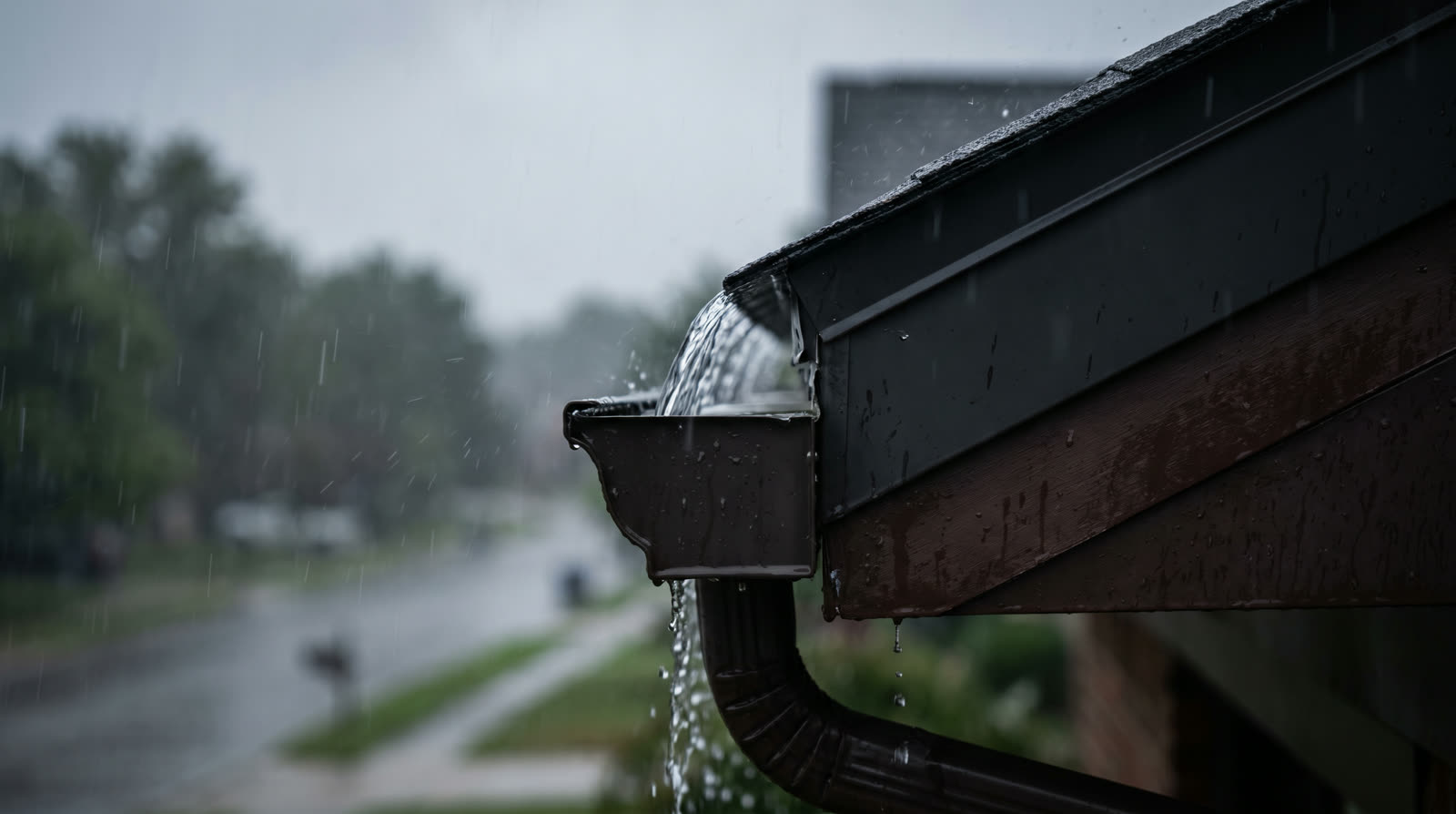
Gutters
A gutter is not about the roof. It is about moving thousands of gallons a year away from the dirt around your foundation.
People treat gutters as an afterthought and then pay a foundation guy five figures. Your roof sheds an enormous volume of water and it all lands in a narrow strip against your house. Gutters exist to take that water somewhere else. When they are undersized, badly pitched, or dumping right at the wall, that water goes into your soil, against your foundation, and eventually into your basement.
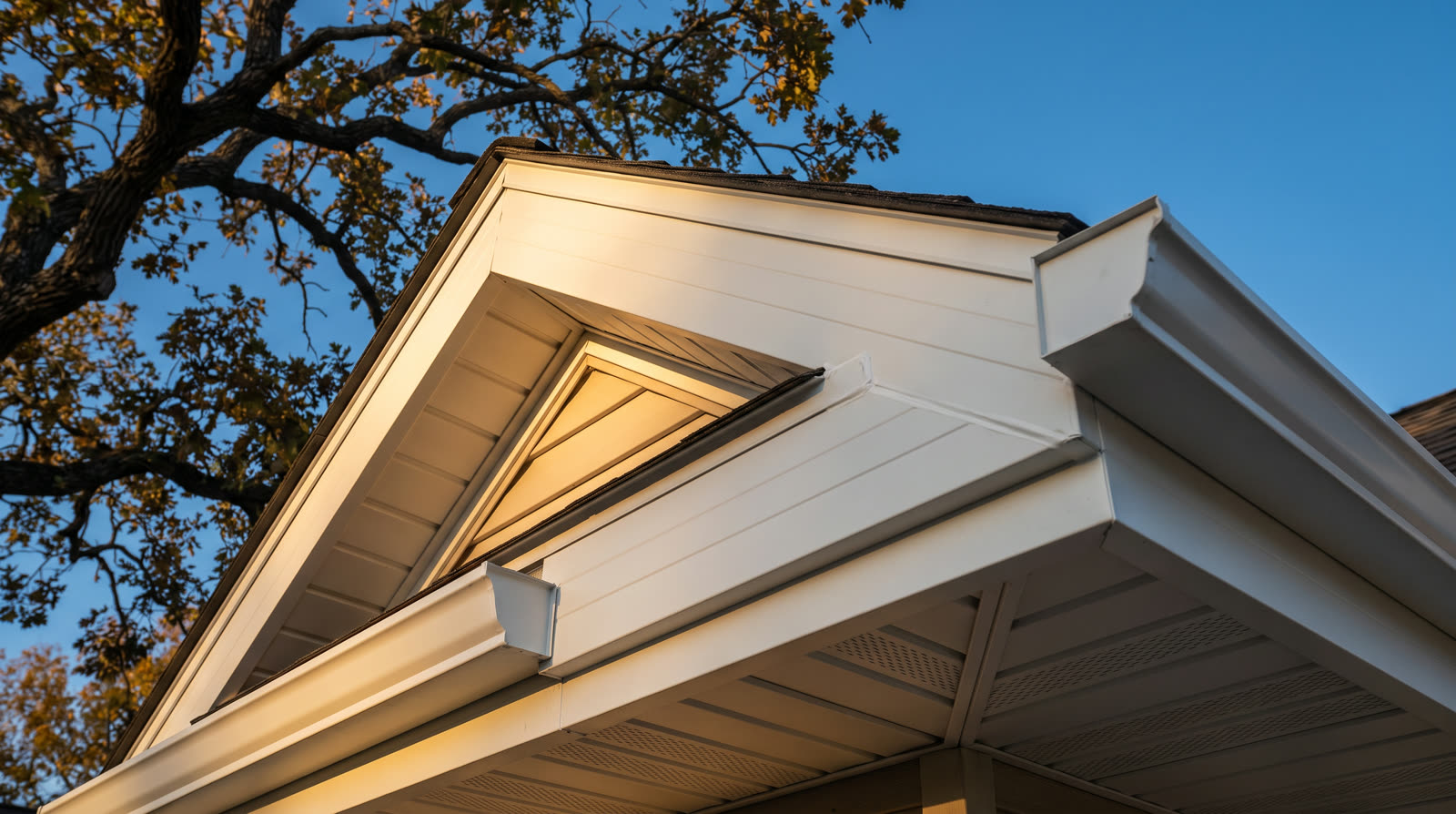
Sectional gutters from a big box store have a joint every ten feet, and every joint is a future leak. Seamless gutters are formed on site in one continuous run for each side of your house. The only seams are at the corners and the outlets.
5 inch is standard on most homes. 6 inch belongs on big roofs, steep pitches, and homes with large surfaces feeding a single run. Undersized gutters do not overflow because they are clogged, they overflow because they were never big enough.
A gutter has to fall toward the downspout, but subtly enough that it does not read as crooked from the street. Too flat and it holds water and sludge. Too steep and it looks wrong on your house.
Gutter apron and drip edge are where gutters meet roofing, and this is our world. Without the right edge metal, water wicks behind the gutter and rots the fascia. You get a brand new gutter on rotting wood.
Getting water into the gutter is half of it. Putting it far enough from the foundation is the half everybody skips.
Questions
5 inch handles most homes. 6 inch is for large roof areas, steep pitches, or long runs where a lot of roof feeds one gutter. If your gutters overflow in a hard rain even when clean, they are undersized.
Under heavy tree cover, generally yes. They cut cleanings way down. They do not make gutters maintenance free, and any company promising you never clean them again is overselling.
Yes. Just as often we find the fascia behind the old gutter is rotted, which is a trim and fascia repair, not a gutter problem. We will show you before we do anything.
Usually rotted fascia. The hangers are screwed into wood that has gone soft, often from water wicking behind a gutter that had no apron. Rehanging on bad wood just fails again, so the fascia gets fixed first.
Yes, and it is the right time. The edge metal, drip edge, and gutter apron all get done together as one detail instead of two crews meeting at a seam.
More From Us
Service Areas
Free Inspection
We will take a look and tell you straight, including when the answer is that you do not need us yet. No pressure and no scare tactics.
Prefer to talk? Call or text (740) 200-8181