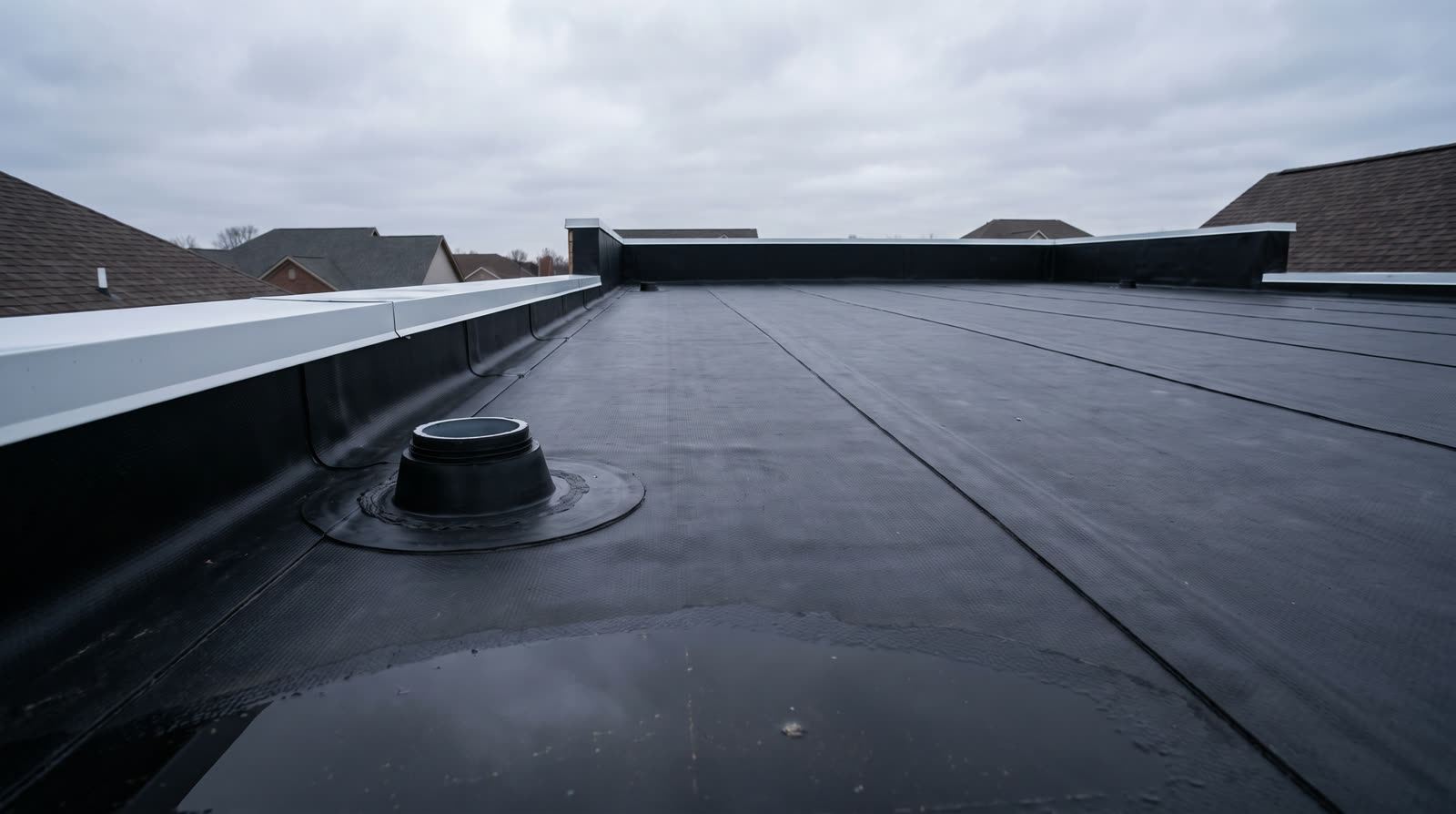
If you have a flat porch roof, an addition, a dormer, or any low-slope section, you have a different problem than the rest of your roof. Below roughly a 2:12 pitch, water sits instead of running off, and shingles are designed to shed water down a slope, not hold it. That section needs a single-ply membrane.
Then the question is which membrane, and around here the honest answer is usually EPDM.
EPDM is rubber. It has far higher elongation than TPO, which means it stretches and moves with the roof as temperatures swing. TPO's headline feature is a white reflective surface that bounces 75 to 80 percent of the sun's heat, which meaningfully cuts cooling costs.
Now think about which of those two things your building actually needs in Delaware, Ohio.
Ohio roofs live through brutal freeze-thaw cycles. Everything on that roof expands and contracts, over and over, all winter. EPDM handles that movement without building stress and cracking. TPO's reflective surface is a genuine advantage in Phoenix or Dallas, where cooling load is the whole ballgame. Here, it is close to irrelevant, and you traded away flexibility to get it.
Whichever membrane goes on, a flat roof fails at the seams and at the penetrations, not out in the middle of the field. The install decides your roof far more than the material does. Ask about the seams and the detail work around every curb, drain, and pipe. That is the job.
The inspection is free and we will tell you straight, including when the answer is that you do not need us yet.
Get My Free Inspection Call (740) 200-8181Keep Reading
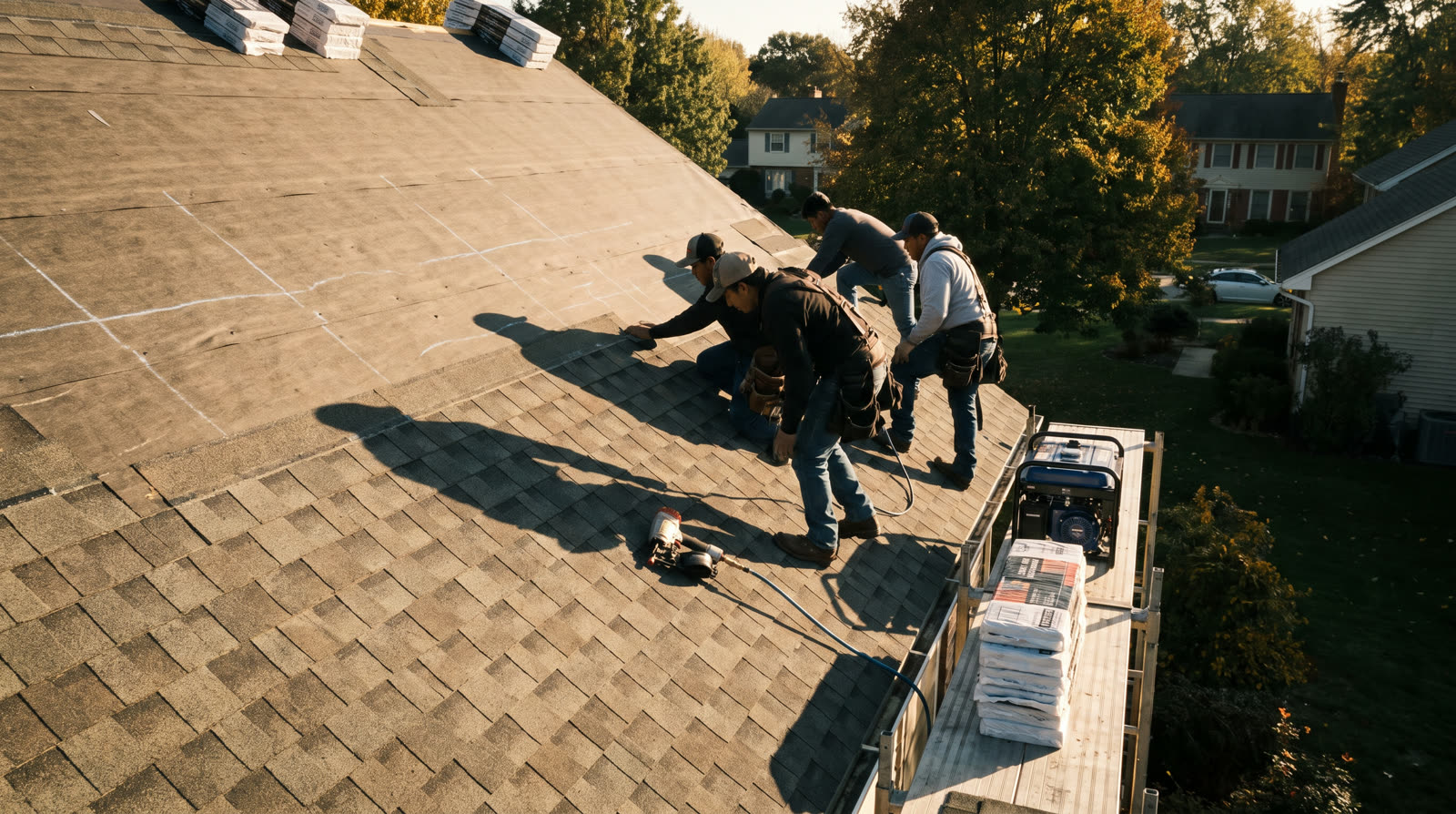
A roof is eight layers. Seven of them are invisible from your driveway, which is exactly why they get skipped.
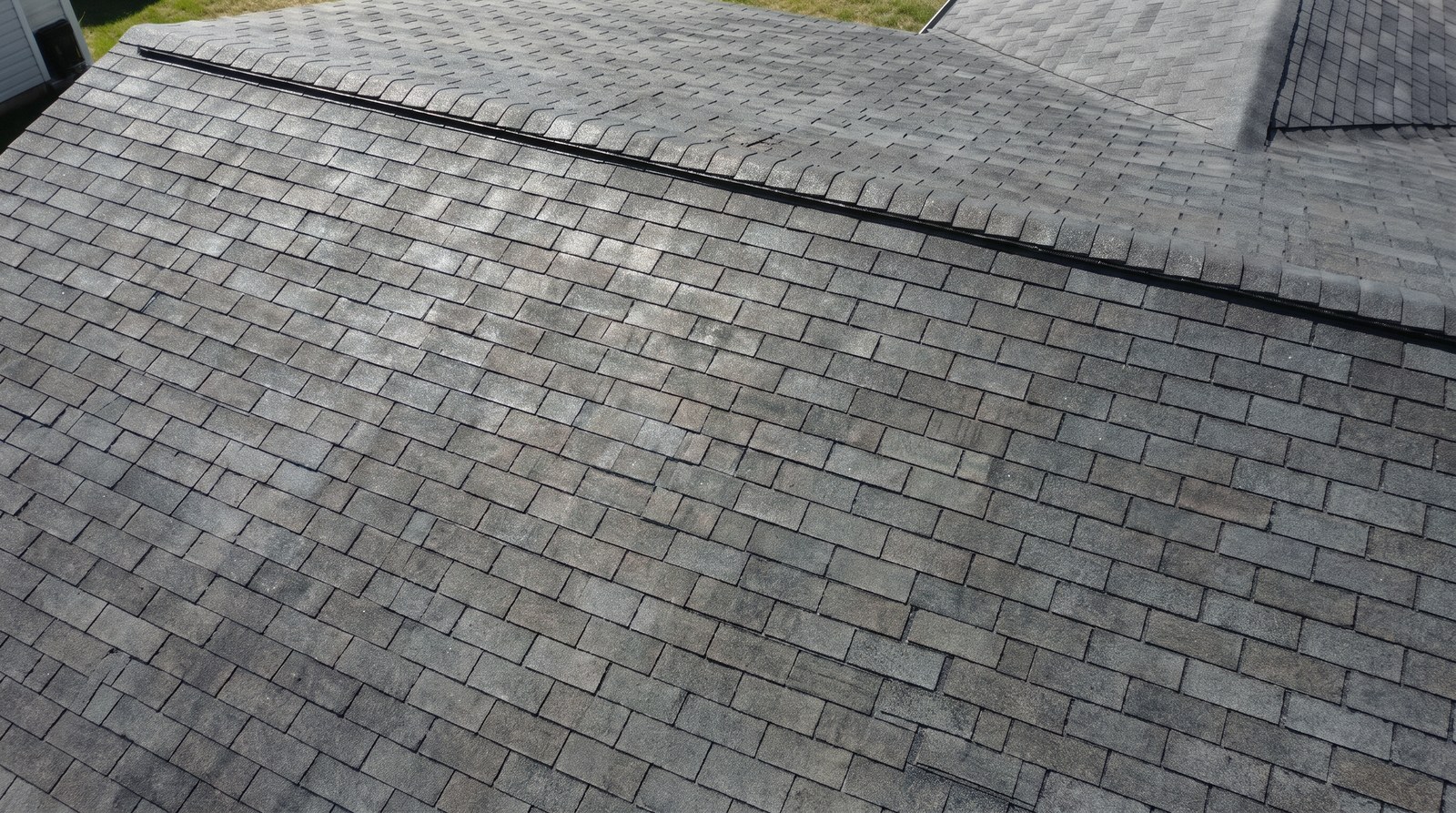
A lot of the roofs coming off in Central Ohio right now did not need to come off yet. Here is how to tell.
The morning after hail, your street fills up with trucks from out of state. Here is what that is actually about.