Nobody in this trade wants to say this out loud, so we will. A large number of the roofs getting torn off around here right now did not need to come off yet.
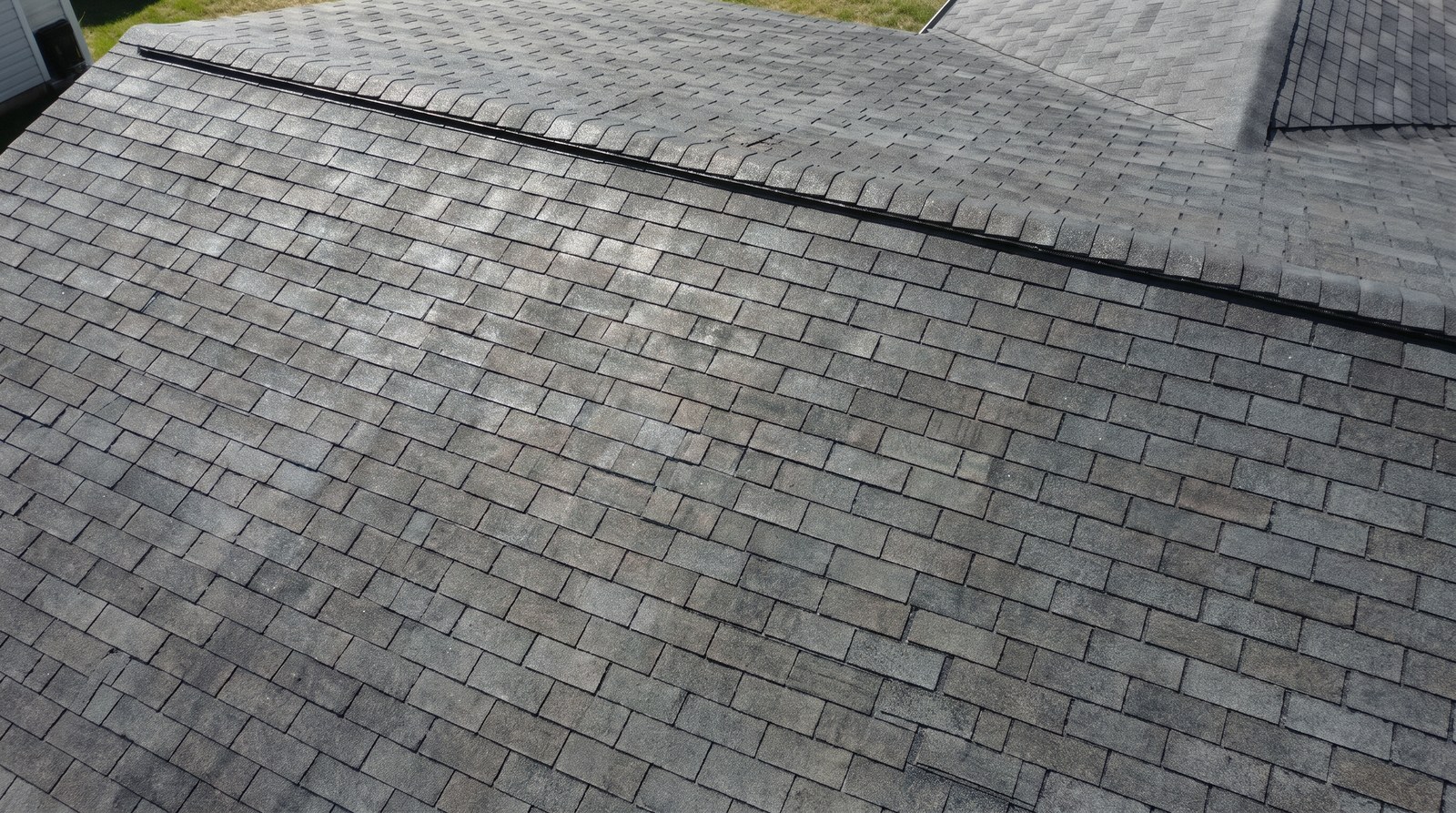
They were structurally fine. Solid decking. Intact flashing. No leaks. The shingles had just dried out, gone chalky, and started dropping granules into the gutters. That roof does not need thirty thousand dollars. That roof needs to be sealed.
Asphalt shingles do not usually fail because something broke. They fail because they dry out. The oils that keep a shingle flexible cook off in the sun, year after year, until the shingle goes brittle, curls at the edges, and starts to crack. At the same time the granules, which are basically your roof's sunscreen, wash away and leave the asphalt underneath exposed to UV. Then the clock speeds way up.
A spray-applied sealant penetrates the shingle and restores that flexibility so it can move with the weather instead of shattering. It binds the remaining granules down and stops the bleed. The roof sheds water again, holds its edge against wind, and takes a hail hit without the brittle shatter you get from a dried-out roof. It also stops looking chalky and grey and goes back to a deep, rich color.
Sealant cannot save a roof that is actually failing. If the decking is soft, the flashing is shot, or there is active leaking, sealing it is throwing money at a roof that needs to come off. We will tell you that. It is the entire reason the inspection is free: to find out which roof you have before you spend anything.
This comes down to condition, not age. And here is the part most people get backwards: the earlier you seal a sound roof, the more life you lock in. Sealant is not a last resort you save for a twenty year old roof. A roof drying out at seven or ten years is a better candidate than one barely hanging on at twenty.
The inspection is free and we will tell you straight, including when the answer is that you do not need us yet.
Get My Free Inspection Call (740) 200-8181Keep Reading
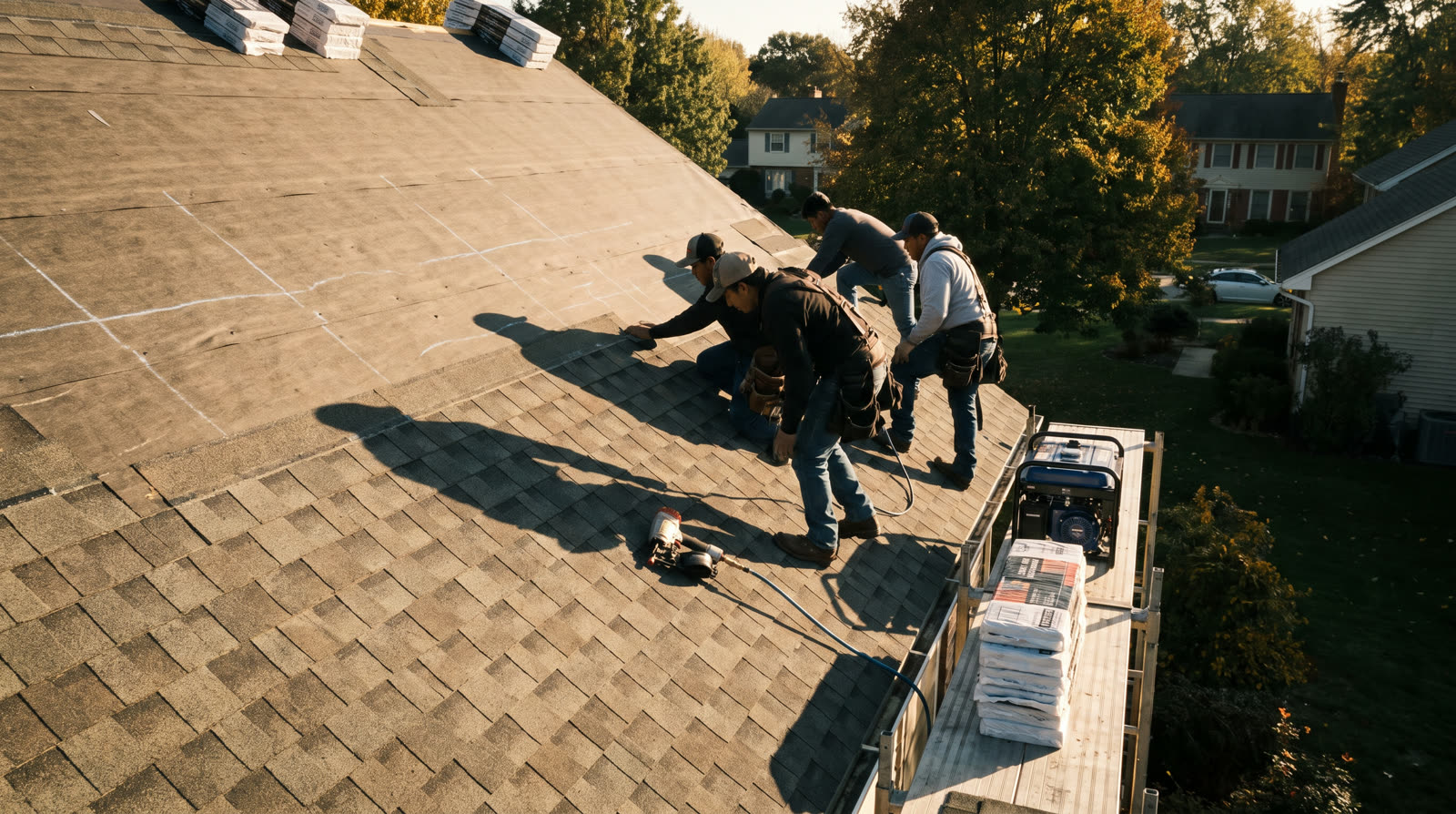
A roof is eight layers. Seven of them are invisible from your driveway, which is exactly why they get skipped.
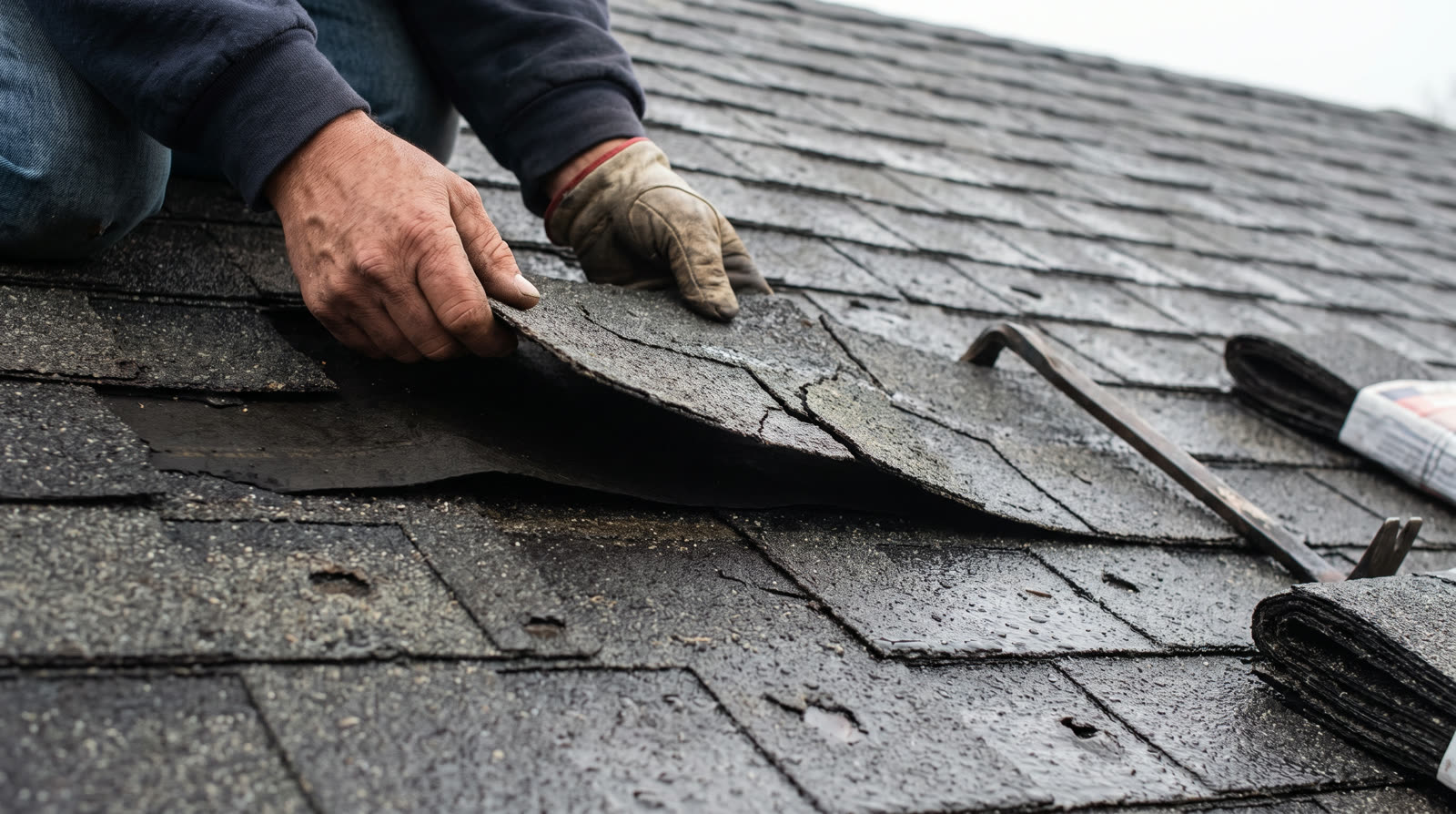
The morning after hail, your street fills up with trucks from out of state. Here is what that is actually about.
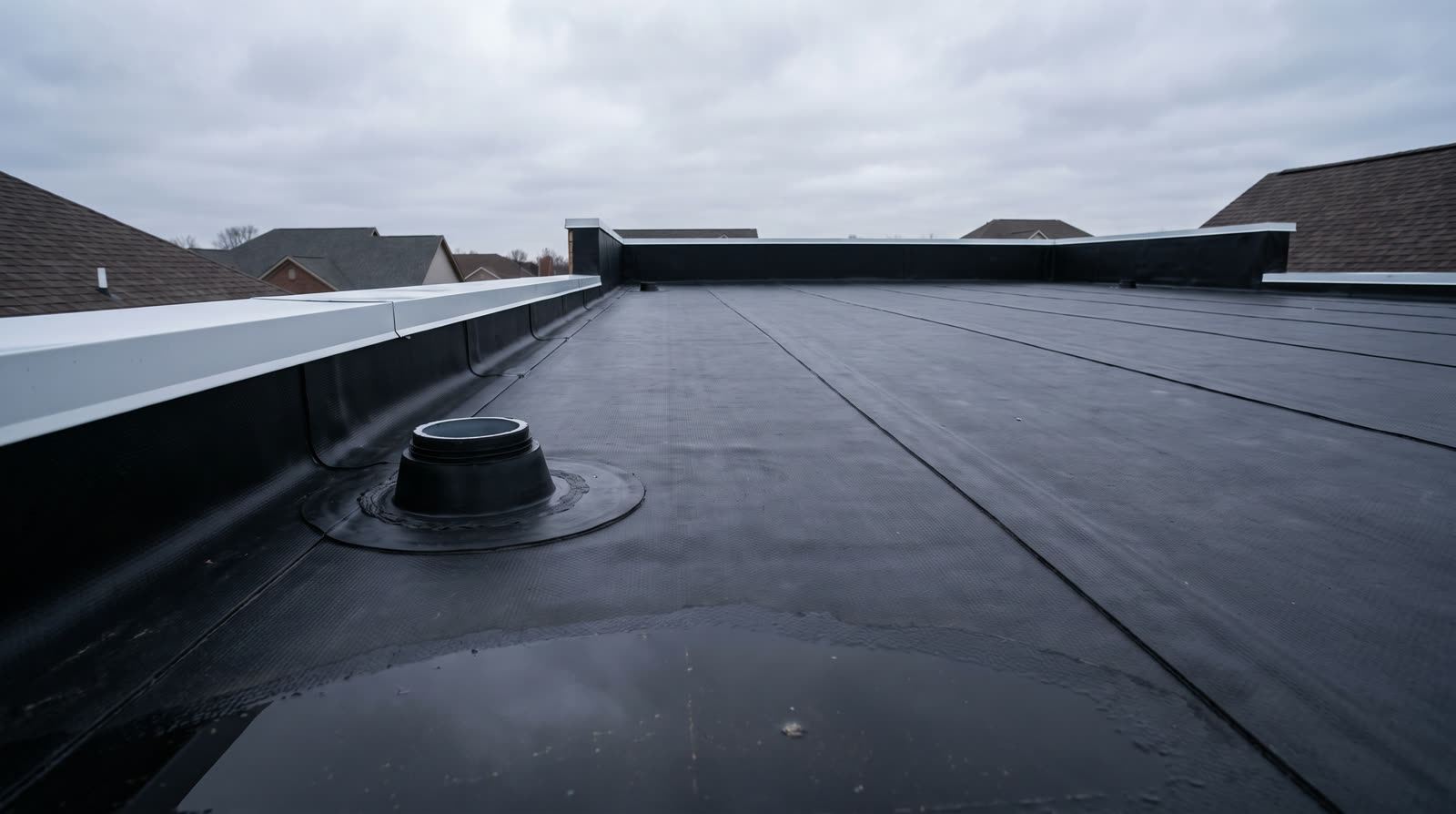
TPO is built for Phoenix. Our problem is not heat, it is ice. That difference decides your flat roof.